Record
Switch on the CardiSong device somewhere quiet and place your fingers on the electrodes or hold it to your chest. The device records the ECG for about 20 seconds and stores it.
The device runs on 2 AA batteries and needs no cables.
Send
The device plays the recording into your phone, held 2–3 cm away. Call 02 4929 309 — no internet, only from the number in your profile — or send it through the app, over the internet.
Through the app, the audio file is sent encrypted.
A relative can set up the app for you — once, on first use.
Your doctor reviews
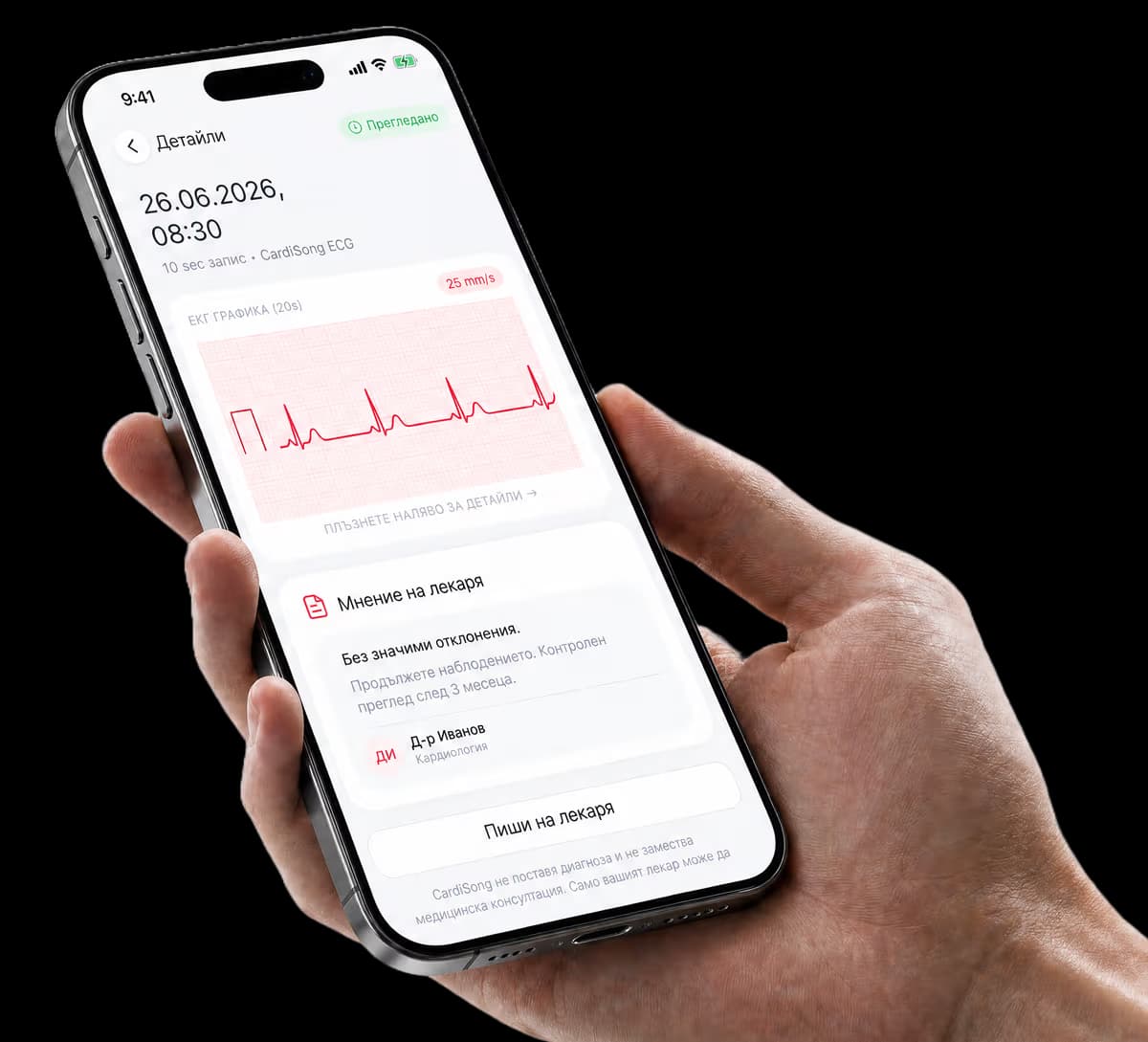
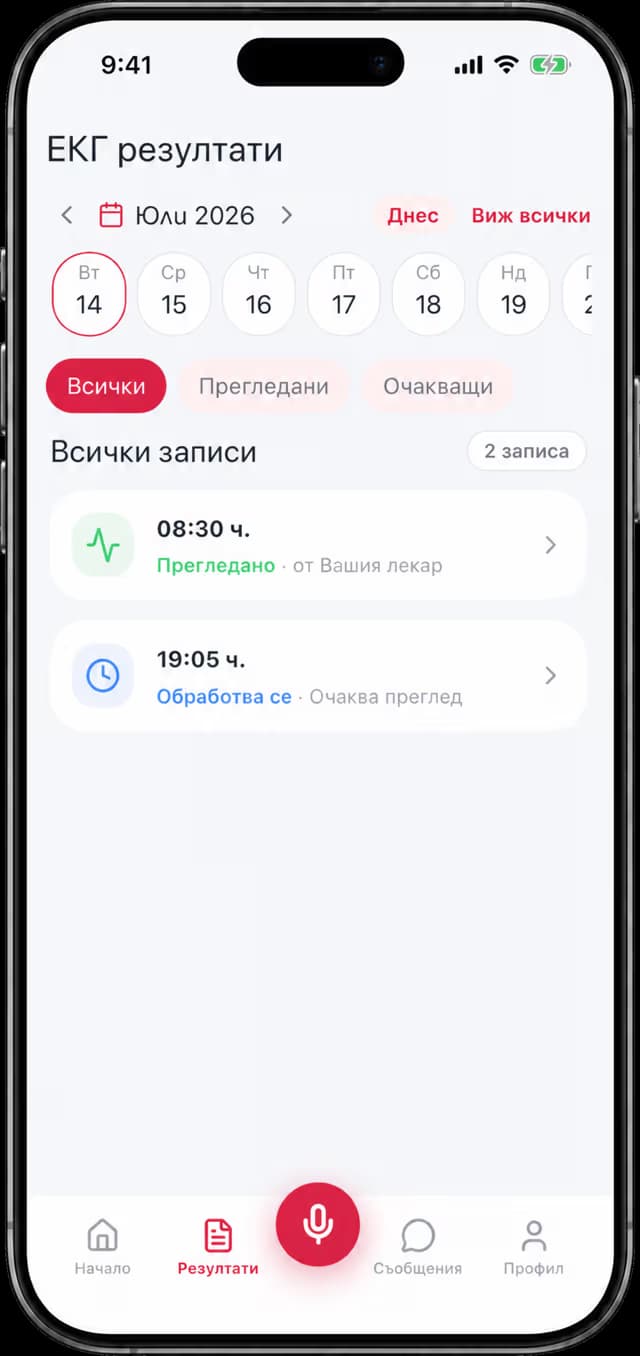
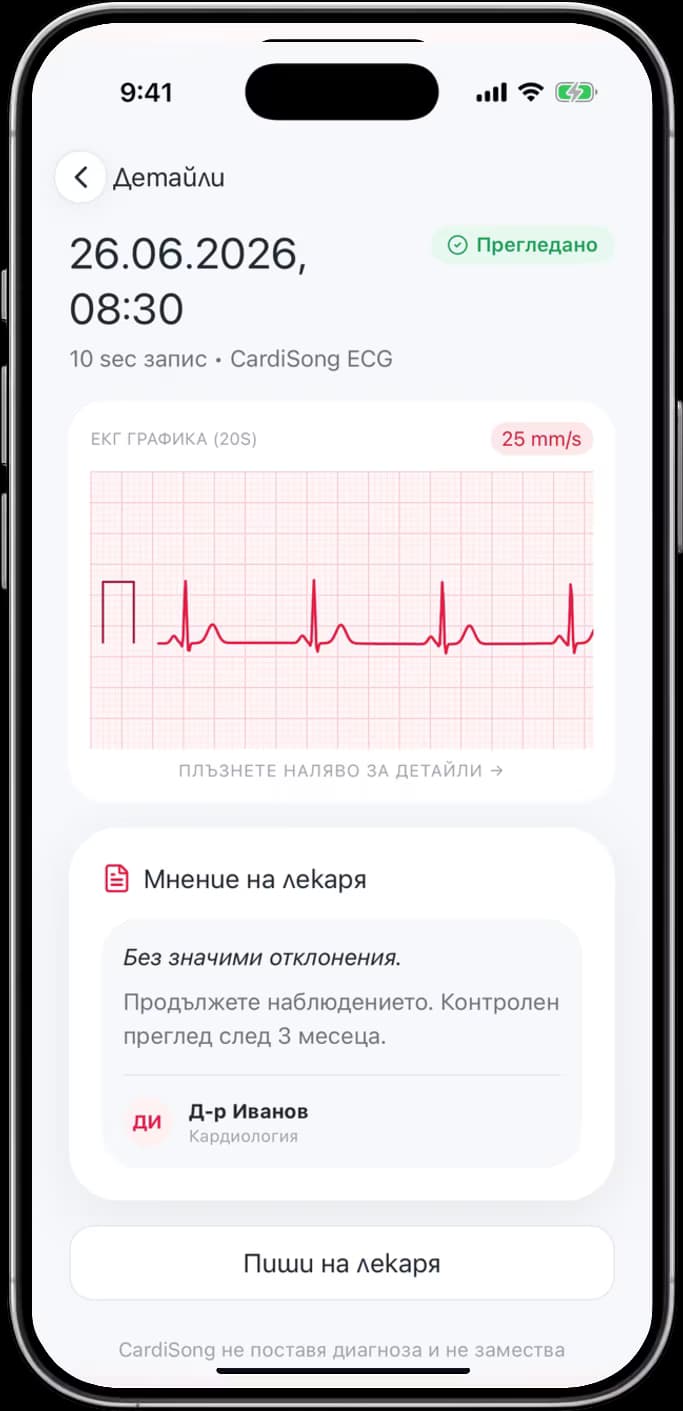
The platform converts the sound into an ECG, and your doctor reads it and gives you their opinion. All recordings stay organized in your profile.
Only your doctor and you have access to your recordings.
How to record an ECG at home
Recording needs no cables, and the device itself needs no internet. All it takes is your CardiSong device, your phone and a few minutes somewhere quiet.
What you do
You place the fingers of both hands on the electrodes, or hold the device against your chest at the spot your doctor has chosen. Before the first recording your doctor shows you how the device works and tells you when to record.
How long it takes
The device records the ECG for about 20 seconds and stores it. While it plays the recording back, the bottom of your phone stays 2–3 cm from it and the room stays quiet — the microphone has to pick the signal up cleanly.
What the app does
If you send through the app, it checks the sound quality and will not send a file that was not captured reliably — on-screen guidance appears and you play the recording again. The audio file is sent encrypted; with no connection it is kept and sent automatically later.
What your doctor receives
The CardiSong platform converts the audio file back into an electrocardiogram. The recording appears in your doctor’s account alongside your earlier recordings, ordered by time.
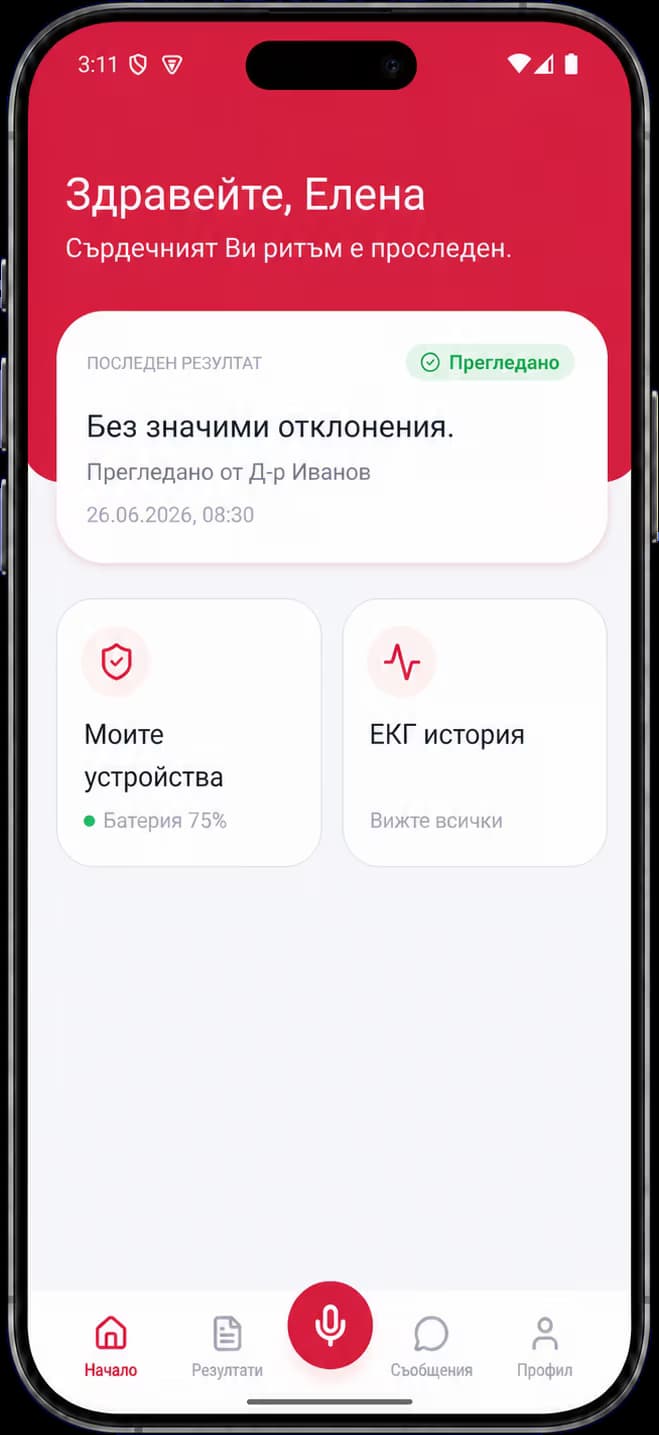
No diagnosis is made automatically. Your doctor sees the signal as it was received, reads it and sends you their opinion through the platform. You are notified when the result is ready; how long that takes depends on your doctor’s availability.
When your doctor judges that the condition needs urgent attention, you also receive an urgent SMS notification. That judgement is theirs — the platform does not decide which condition is urgent. Only your doctor and you have access to your recordings.
Who it suits
Some rhythm disturbances come and go, and can be absent exactly when you are being examined. A recording made at home while the symptoms are there gives your doctor information they would not otherwise have.
Recording at home also helps people who live far from a clinic, have difficulty travelling or have limited access to a cardiologist. It adds to follow-up between visits rather than replacing it.
To begin, you need to register with a doctor first. Your doctor decides when and how often you record.
What you need to start
The CardiSong device runs on two AA batteries, needs no cables and needs no Bluetooth pairing. Beyond it you need a phone and a doctor who works with CardiSong.
The recording reaches the platform in two ways: by calling the automated line 02 4929 309, which needs no internet and only accepts calls from the number in your profile, or through the app, over the internet.
The details are in the guide to remote ECG follow-up, in Bulgarian.
What CardiSong does not replace
CardiSong records heart activity only while a recording you started is running. It does not provide continuous monitoring and does not replace a prescribed Holter study or a standard 12-lead ECG.
The device and the platform do not diagnose. CardiSong records, transmits and organises the ECG recordings; reading them and giving an opinion remain your doctor’s work.
Ready to start?
Ask your doctor about CardiSong. The app is on Google Play.